Learning the Ground Before the Sheep Arrived
In April, the first green grass began pushing through the dead vegetation left by winter. It was also raining heavily, and water collected across sections of the pasture. The contrast made our first task clear: before we divided the land for rotational grazing, we needed to understand what was actually underfoot.
Rotational grazing involves moving livestock through a series of smaller grazing areas, or paddocks, rather than giving them continuous access to the entire pasture. Drawing those paddocks on a map was relatively easy. Deciding where they should go required walking the ground.
Learning What Was Grazable
We surveyed each part of the property up close, looking at the vegetation, drainage, slope, and terrain. The wet April made the low areas particularly easy to identify.
We noted those sections because we wanted the sheep to keep their hooves as dry as possible while grazing. Prolonged exposure to wet, muddy ground can contribute to hoof problems and infection.
Other areas presented a different challenge. Our land contains several rocky outcroppings known locally as ledge. Mosses, lichens, wintergreen, and other low-growing shrubs surround much of it. These plants offer little grazing value, but the ledge itself stays dry. It gives the sheep a firm place to stand when the surrounding ground becomes mucky.
That was one of our first lessons: land that contributes little forage can still serve a useful purpose within a paddock.
Moving the Map Onto the Land
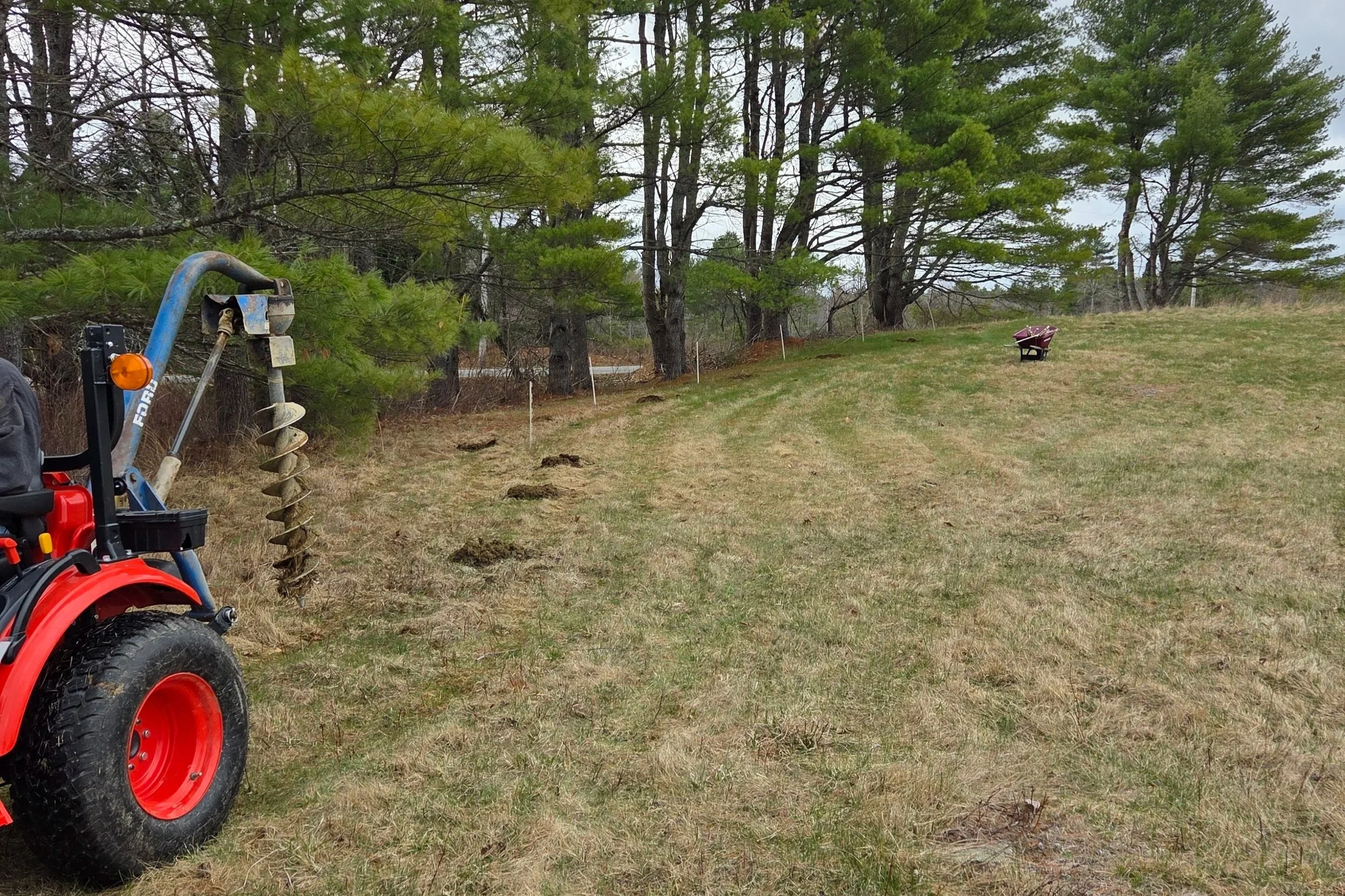
Once we understood the ground better, we drew the paddock cells in Google Earth. We then carried plastic fence posts into the fields and staked the corners using our position relative to the map.
The markers gave us a physical outline for each rotation. They showed us where to place the temporary fencing and where the following paddock would begin.
Later in the season, those same markers guided us while mowing narrow paths for the fence. Cutting the paths kept us from trying to lay temporary fencing through dense vegetation. We struck a few hidden rocks along the way, but the mower and weed whacker made moving and setting the fence considerably easier.
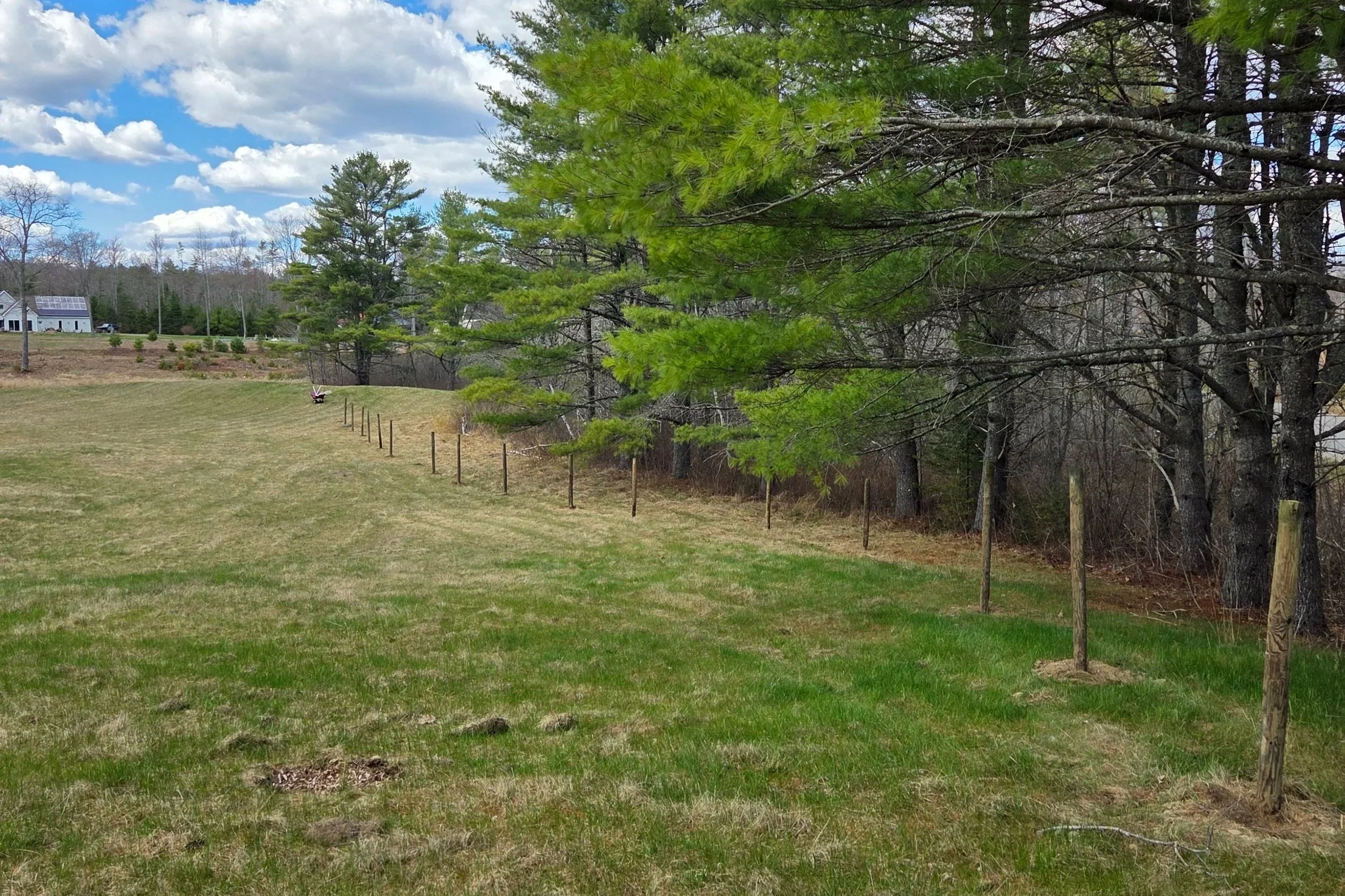
We also reused nearly forty pressure-treated wooden posts left by the former owners. These became a permanent roadside border fence made with four strands of 12.5-gauge high-tensile wire.
The fence was intended to discourage predators and provide a final barrier if the sheep escaped their temporary enclosure. That second purpose became more than theoretical when two adult ewes slipped through a gap during one rotation. The incident reinforced the value of having a permanent boundary between the rotational paddocks and the road.
What the Sheep Showed Us
Each move exposed the ewes to a different mix of forage, and their choices told us things the pasture survey could not.
Rotation 4 covered a rocky slope with scattered shrubs and wild highbush blueberries. Our eldest ewe quickly browsed nearly every leaf from one blueberry bush.
Rotation 7 occupied one of the lowest parts of the property, excluding the wetland itself. The ground was mostly dry by mid-June, but plants associated with the wet conditions still dominated the paddock. The sheep avoided most of that vegetation.
Large parts of the south field also contained wild strawberries. The plants grew close to the ground and produced raisin-sized berries in early June. They covered space, but their low growth limited how much usable forage they provided.
Clover produced a very different response. Whenever the sheep found it in a new paddock, they went to it immediately. I watched this somewhat nervously because consuming too much clover can cause frothy bloat, a dangerous buildup of gas in the rumen.
Across several rotations containing substantial clover, however, our sheep appeared to regulate themselves without trouble. They did graze it differently from grass. Instead of biting the tips and moving across the paddock, they repeatedly returned to the same clover patches until those areas looked as though they had been bushhogged.
[Photo: sheep grazing a clover patch in the south field]
Adjusting Shelter and Water
Our movable “sheep shaw” shelter worked well during the first few rotations. Its weight became a problem once we needed to move it across the rocky, uneven ground that divides the property.
In the south field, groups of maples, oaks, and pines provided the practical alternative. The sheep rarely used most of them for shelter. They did gather beneath the trees near the western end of the field, where the position of the trees created shade during the hottest part of the day. Simply including trees inside a paddock was not enough; their location relative to the sun and the paddock boundary determined whether the sheep used them.
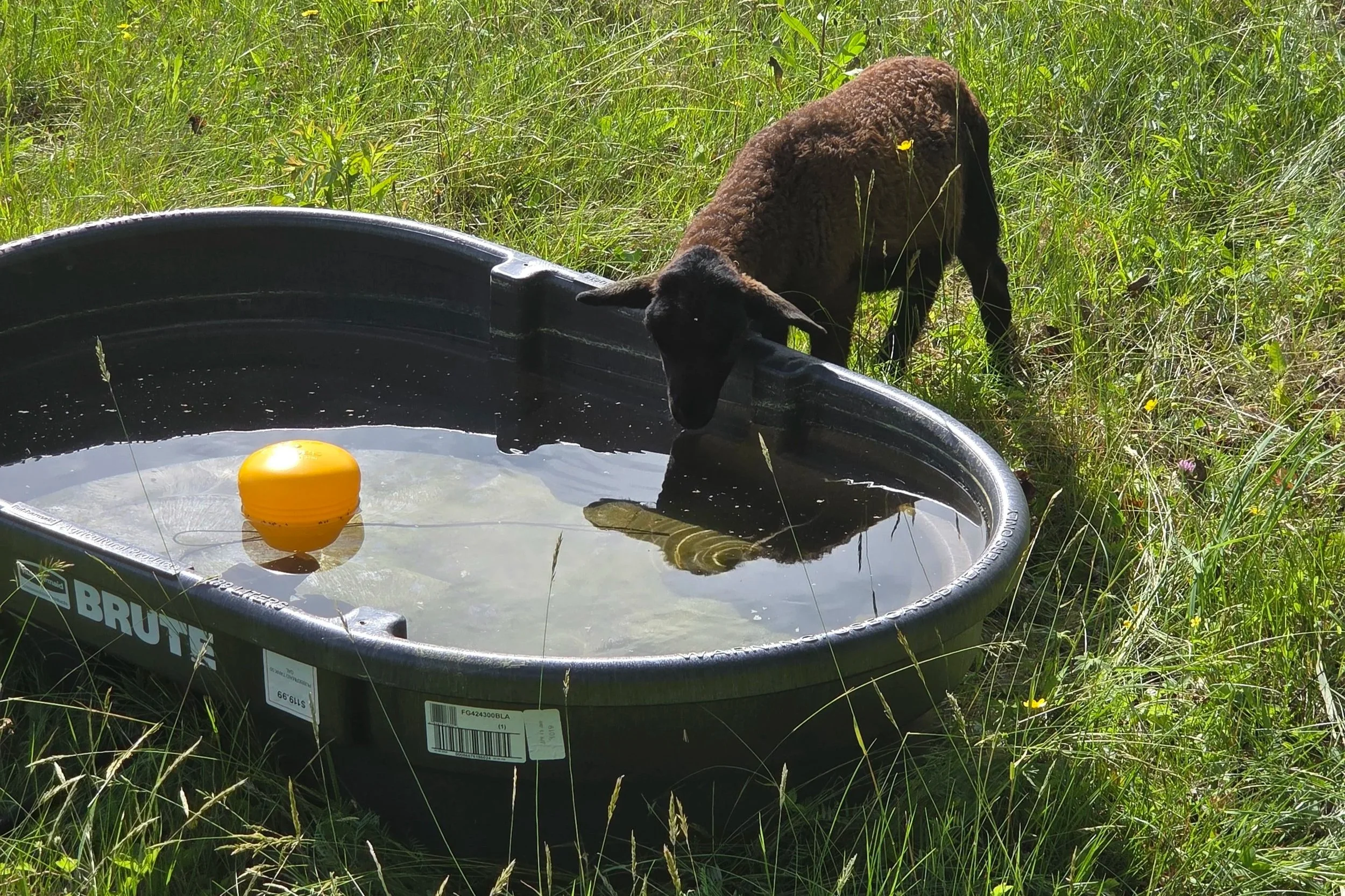
Water required a more deliberate system. We installed a Jobe MegaFlow float valve inside a 50-gallon Rubbermaid trough. Five hundred feet of half-inch polyethylene tubing connected the trough to our hydrant through a reusable Twist-N-Lok adapter.
The long water line allowed us to move the trough with each rotation. The float valve then refilled it automatically, giving the sheep a consistent supply of fresh water without requiring us to carry water into every new paddock.
A System Shaped by the Land
Our paddock map gave us a place to begin, but the working grazing system emerged from what we found on the ground: April mud, dry ledge, hidden rocks, uneven forage, useful shade, and the particular plants the sheep chose or ignored.
The first season has made the limitations of the land clearer, but it has also revealed where the pasture already works well. Each rotation gives us more information for refining the next one. The goal is not to make every section of the property uniform. It is to build a system that fits the land we have and becomes more practical with each season.
